
Feature
Weight-loss coaching that counts effort, not promises
By Caleb King, founder of CoachhUpdated
Coachh coaches weight loss through the things you control each day: meals logged, protein, steps, training sessions and simply showing up. Weigh-ins become a 7-day trend, so one heavy morning barely moves it, and every Sunday a weekly review links what you ate to how the trend moved. Timelines come from your own pace and are never promises.
How it works, step by step
Step 1: Set goals that can live together
Tell Coachh what you want, in your own words. It builds a plan around it, ranks your goals so they don't pull against each other, and gives you an honest take when a goal or a timeline isn't realistic.
Step 2: Get today's effort targets
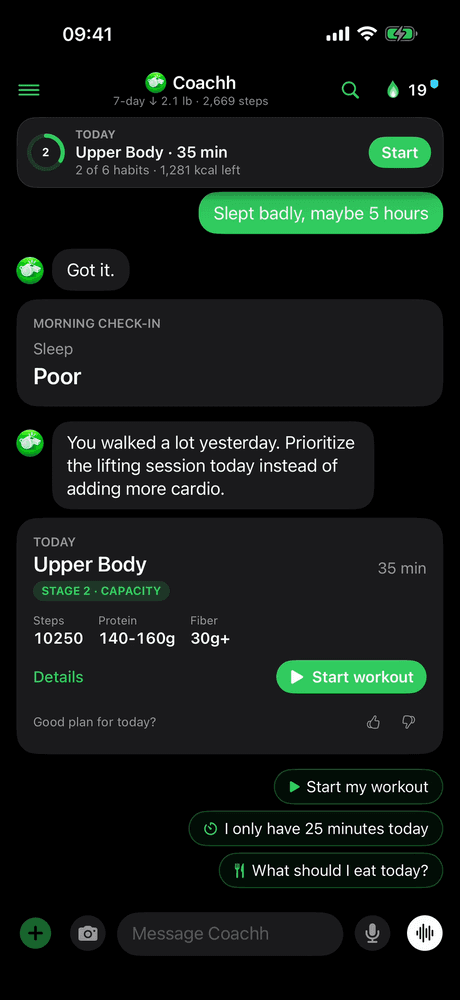
Each morning's plan carries targets you can act on today: a step goal that starts near what you already walk, not a fixed 10,000, and grows a little each week you hit it; a protein range; and the day's session.
Step 3: Log the day in plain words
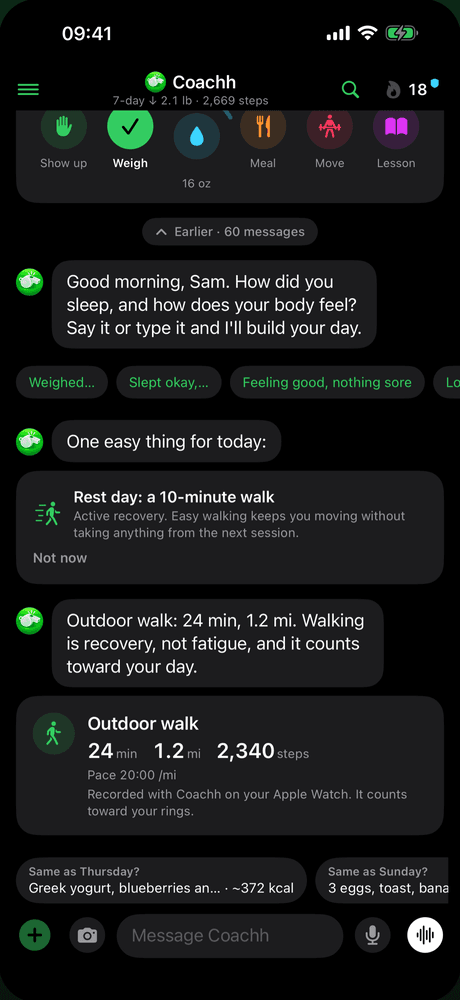
"Weighed 184, had eggs and toast, walked 20 minutes" is a weigh-in, a meal and a walk. A smart scale that writes to Apple Health sends its weigh-in once, and walks from your Apple Watch arrive on their own. On a rest day, Coachh suggests a short, easy walk.
Step 4: Watch the trend, not the morning
Every weigh-in feeds a 7-day trend that one heavy morning barely moves. Ask how long your goal will take and Coachh answers from your own recent pace, as an estimate, and updates it as the trend changes.
Step 5: Review the week, every Sunday
The week in review posts once on Sunday and links what you ate to how your weight moved and what you lifted. On the 1st, last month's recap is built from your own numbers.
Why doesn't Coachh promise a result?
Because nobody can honestly promise one. Your weight moves with water, salt, food passing through and hormones, not only fat: Cleveland Clinic puts a normal day-to-day swing at around 5 to 6 pounds. And the pace of real change differs from person to person and from month to month.
What a coach can do is help you repeat the few things that make a difference, on good days and bad ones. So Coachh is strict about what it says: realistic timelines from your own trend, goals ranked so they don't fight each other, and a straight answer when a plan change would pull you off track.
What does Coachh measure instead?
Effort you can see and repeat. These are the numbers Coachh puts in front of you:
| What | How Coachh counts it |
|---|---|
| Showing up | Your day streak: a check-in, a weigh-in, a workout or holding "show up" keeps it |
| Training | Sessions done against the plan, with 15-minute versions counted as short |
| Food | Meals logged, calories and protein against today's targets |
| Movement | Steps against a goal that grows from what you already walk |
| Water | Glasses against today's target |
| Body | The 7-day weight trend, plus waist and hip measurements if you want them |
Weekly progress photos are optional, stay on your iPhone unless you turn on backup, and the coach never sees them, only their dates. A recap you share leaves out weight, measurements and photos unless you switch them on.
What does a 7-day weight trend show that a daily weigh-in doesn't?
The direction. A single morning can jump after a salty dinner or a hard training day; the average of the last seven days barely moves for one heavy morning. Coachh's progress chart shows each weigh-in as a dot and the 7-day average as the line, the number that matters.
You don't have to weigh in daily. The trend uses whatever weigh-ins you log, and if weighing in is stressful for you, weigh in less often: the coaching works from your food, training and steps too. More on why daily numbers jump in why the scale lies.
How is Coachh different from Noom?
Noom is built around daily lessons on psychology and behavior change, with food logging, step tracking, classes and optional one-on-one coaching, according to its own pages (see Noom alternatives for details and dated prices). If daily lessons and a human coach are what keep you going, Noom may suit you better.
Coachh is a coach in one chat that also writes your workouts. It has a 42-lesson course, one short lesson a day, but no human coach, classes or groups. Its weight coaching sits next to a strength plan, so your sessions, your food and your trend inform each other. If you're comparing costs, Coachh vs a six-app stack does the math.
What if you're on a GLP-1 medication?
Coachh doesn't track doses and doesn't give advice on medication; questions about a medication go to your prescriber. What it can help with is the rest: a strength plan and enough protein to help protect muscle while you lose weight. Our guide to strength training on a GLP-1 covers the evidence.
Coachh is a fitness and nutrition coach, not a medical service. If you describe symptoms that could be serious, such as chest pain or fainting, it stops coaching and points you to medical help.
What it’s good at
- Turning a weight goal into daily effort you can see: steps, protein, sessions and days you showed up.
- A weight trend that ignores one heavy morning.
- Food, training and weight in one place, linked every Sunday.
- Restarting without guilt: streak saves, missed sessions picked up, easier weeks after time away.
Honest limits
- No promises and no guaranteed pace: timelines are estimates from your own trend.
- It isn't a medical program: it doesn't diagnose, treat or dose medication, and there's no GLP-1 dose tracker.
- No human coach, classes, groups or community.
- It's for adults: setup only accepts a birth year that makes you 18 or over.
What does it cost?
Everything on this page comes with Coachh Pro, one subscription with everything in it: $119.99 a year or $19.99 a month (US prices). The yearly plan starts with a 7-day free trial; the monthly plan has no trial, and there’s no free tier. The full details, including how to cancel, are on the pricing page.
Compare apps and read more
Comparisons
Guides
Common questions
Is there a weight-loss app that doesn't make promises?
Coachh is built that way. It coaches the effort you control (meals, protein, steps, sessions, showing up), tracks your weight as a 7-day trend, and gives timelines from your own pace as estimates, never promises.
How often should I weigh myself?
As often as is useful to you. Daily weigh-ins give the 7-day trend more to work with and one heavy morning barely moves it, but weekly is fine too, and Coachh coaches food, training and steps whether you weigh in or not.
Does Coachh count calories for weight loss?
Yes. Meals logged by sentence, photo or barcode count toward daily calorie and protein targets. Coachh suggests the targets, and you can set your own.
Can Coachh help if I'm on Ozempic or another GLP-1?
With training and food, yes; with the medication, no. Coachh doesn't track doses or advise on medication. It can build a strength plan and keep protein in view, which matter for protecting muscle while you lose weight.
Does it work with my smart scale?
Yes, if the scale writes to Apple Health: each weigh-in comes in once and counts for today, and body-fat readings come in too. You can also just tell Coachh your weight.
Sources
- 7 Possible Reasons Why Your Weight Fluctuates. Cleveland Clinic, 2024.